
Colorectal Cancer
Cancer
- Anemia
- Benign Hematologic treatment
- Bile Duct Cancer
- Bladder Cancer
- Brain Cancer
- Breast Cancer
- Colorectal Cancer
- Esophageal Cancer
- Floor of the Mouth Cancer
- Gastric Cancer
- Head and Neck Cancer
- Hematologic Malignancies
- Iron Deficiency Anema
- Kidney Renal Cancer
- Larynx Cancer
- Leukemia
- Liver Cancer
- Lung cancer
- Lymphoma
- Multiple Myeloma
- Nose Cancer
- Penile Cancer
- Prostate Cancer
- Sickle cell anemia
- Solid Tumor
- Spinal Tumor Clinic
- Testicular Cancer
- Throat Cancer
- Urological Cancers Treatment
What is Colorectal Cancer?
Colorectal cancer, also known as colon cancer, bowel cancer, or rectal cancer, is a type of cancer that develops in the colon (large intestine) and the rectum. This occurs when the normal cells lining the large intestine and rectum become abnormal and start multiplying and growing out of control. Over time, the abnormal cells start forming a tumor, which can be benign, non-cancerous, or malignant.
In the early stages, colorectal cancer may not present any obvious symptoms. This type of cancer is considered to be the third leading cause of cancer deaths among men and second among women. Colorectal cancer can often be detected through colorectal cancer screening, which helps with early intervention.
Types of Colorectal Cancer
There are various types of colon cancer, and these include:
- Adenocarcinomas: Colon and rectal adenocarcinomas are a high-risk cause of colorectal cancer. The cells may start as polyps which form in the gastrointestinal tract, spreading to the internal lining of the large intestine, leading to cancer. A type of polyp called adenoma tends to grow into cancer and can be removed beforehand if the cancer is caught early during a routine procedure known as a colonoscopy.
- Gastrointestinal Carcinoid Tumors: These tumors spread in the nerve cells called neuroendocrine cells, where hormone production is regulated. Carcinoid tumors normally grow slowly and spread in the gastrointestinal tract, contributing to colorectal cancer.
- Colorectal Adenocarcinoma: Adenocarcinoma is a cancer that develops in the epithelial cells that line the surface of the body. Colorectal adenocarcinoma forms in the inner lining of the large intestines and extends to the outer layer. There are two genotypes of adenocarcinoma:
- Signet Ring Cell Carcinoma (SRCC): An odd form of malignant adenocarcinoma, which extracts mucin, and its rate of cell division is very aggressive.
- Mucinous Adenocarcinoma: Contains extracellular mucin, encouraging cancer cells to grow quickly and become aggressive.
- Gastrointestinal Stromal Tumors (GIST): A rare type of tumor forming in the lining of the gastrointestinal tract. GIST is cancer that starts in connective tissues such as muscle, deep skin tissues, nerves, blood vessels, and fat. This develops in the stomach, small intestine, or rectum.
- Primary Colorectal Lymphomas: A rare condition, mostly affecting older men, occurring in the lymphoma system in lymphocyte cells. The lymphoma may grow in the digestive tract, lymph nodes, spleen, and bone marrow.
Symptoms of Colorectal Cancer
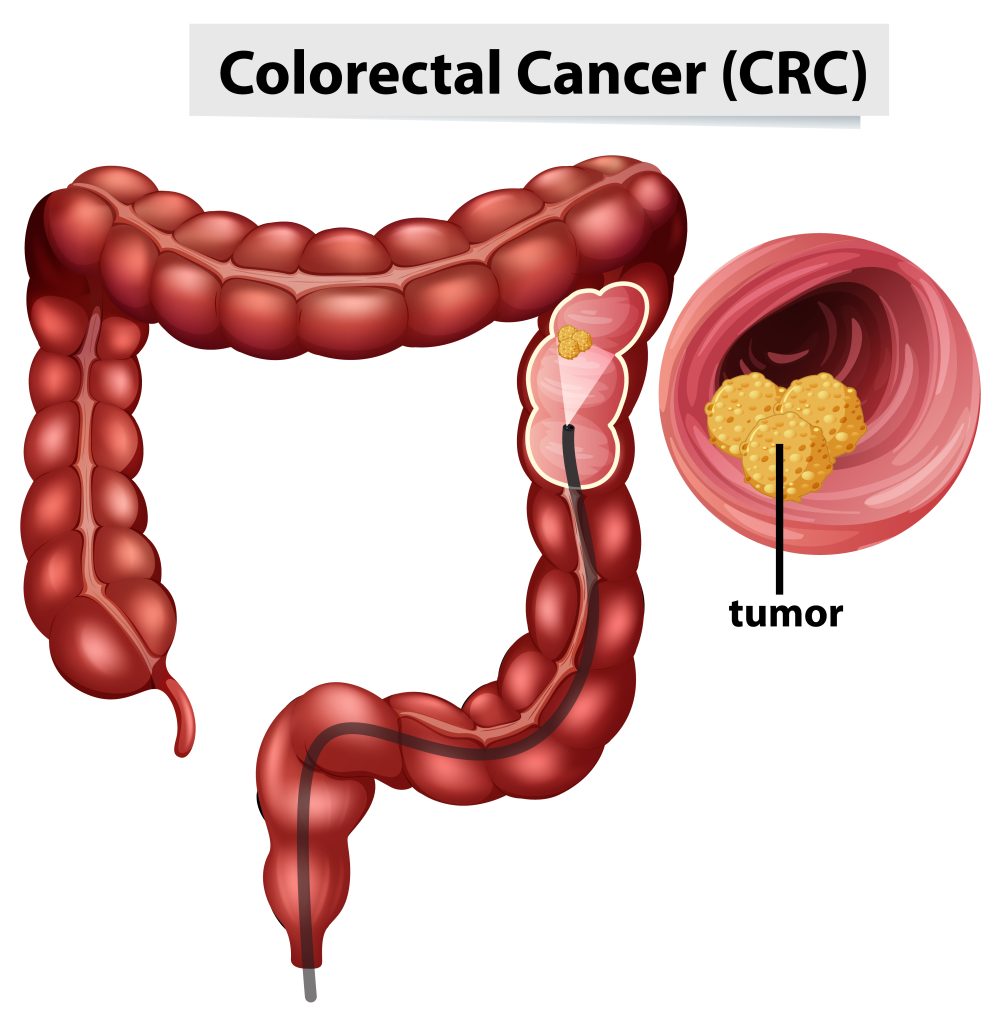
During the early stages, colorectal cancer may not present any obvious symptoms. However, an individual may experience symptoms such as:
- A feeling of fullness in the bowel even after emptying it
- Abdominal discomfort such as pain, gas, and bloating
- Constipation and/or diarrhea
- Black stool due to the presence of blood
- Bleeding from the rectum
- Fatigue
- Unexplained drastic weight loss
- Abdominal cramping
- Nausea and vomiting
Causes and Risk Factors of Colorectal Cancer
There is no known cause for colorectal cancer, although studies are ongoing. However, there are risk factors that may increase the chances of developing the disease. These include:
- Age: Studies show that older individuals have a higher risk, with this risk increasing after the age of 50.
- A history of colon polyps
- Genetic predisposition: Inherited syndromes like familial adenomatous polyposis.
- Family history of colorectal cancer.
- Chronic inflammatory diseases such as Crohn’s and ulcerative colitis
- Obesity
- Sedentary lifestyle
- History of bowel disease
Diagnosis of Colorectal Cancer
Polyps can be detected before they grow into cancer. If colorectal cancer is detected in its early stages, it can be successfully treated. Some of the Cancer test Dubai methods used to detect colorectal cancer include:
- Colonoscopy: A colonoscopy is a procedure where the colon and rectum are fully examined using a tiny camera. If performed early, colorectal cancer can be avoided if polyps are detected and removed.
- CT Colonography: This is a procedure using a CT machine that takes images of the colon. The colon is first emptied before the examination. This efficient test can detect colorectal cancer in its early stages or when it is still in the form of polyps.
- Imaging Tests: MRI scans or ultrasound assist in determining if the cancer has spread to other parts of the body.
- Blood Stool Test: This examination checks for the presence of blood in the stool, but it may not always be accurate as the blood may not always be present.
- Stool DNA-fecal Immunochemical Test: This test detects mutations in the cells shed in stool linked to colon cancer and identifies small amounts of blood.
- Lower Gastrointestinal Tract Radiography (Barium Enema): An X-ray where a contrast dye is placed in the patient’s bowel to create a clear image of the rectum, colon, and part of the small intestines.
- Flexible Sigmoidoscopy: A procedure using a thin flexible tube (sigmoidoscope) inserted into the rectum to examine the colon.
Colorectal Cancer Treatment
Colorectal cancer treatment is usually dependent on:
- The aggressiveness of the cancer
- The type of cancer
- The stage of the cancer
- The size and location of the tumor
- The patient’s age and overall health
- Family history of colorectal cancer
- Gene mutation test results
Treatment options for colorectal cancer include:
Surgery
A malignant tumor in the colon and lymph nodes is usually removed surgically to prevent the multiplication of cancer cells. Sometimes the rectum is also removed completely. Afterward, a colostomy bag is attached temporarily to enable drainage of the stools.
Chemotherapy
Chemotherapy in Dubai involves the use of anti-cancer drugs to destroy any remaining fast-growing cancer cells in the thyroid area.
Targeted Therapy
Targeted therapy such as bevacizumab (Avastin) and ramucirumab (Cyramza) is sometimes used to kill the specific protein cells that cause the development of colorectal cancer.
Radiation Therapy
Radiation therapy involves high-energy radiation that penetrates and destroys the cancerous cells, stopping them from multiplying. This is sometimes done before surgery to shrink the tumor.
Immunotherapy
Immunotherapy helps the body’s immune system recognise and attack cancer cells more effectively. It may be recommended for selected colorectal cancers with specific genetic or molecular characteristics.
Next Steps
If you are experiencing persistent bowel changes, unexplained weight loss, or have been advised to undergo screening, early specialist care is essential.
At King’s Cancer Hospital Dubai, our colorectal oncology specialists provide advanced diagnostic evaluation and personalised treatment for colon and rectal cancers.
With access to modern screening tools, minimally invasive surgery, chemotherapy, radiation, and targeted therapies, our multidisciplinary team supports you from early detection through treatment and recovery with expert, compassionate care.


